

Read in 120 seconds:
- Notable C-Suite Moves
- 2025 in Review
- Why Value Didn’t Scale (Hard Truths for C-Suites)
- 2026 Will Be the Year of AI Profitability For...
- The 90-Day Action Plan for C-Suites (Start of 2026)
- C-Suite Trends Going Into 2026
- From the Podcast
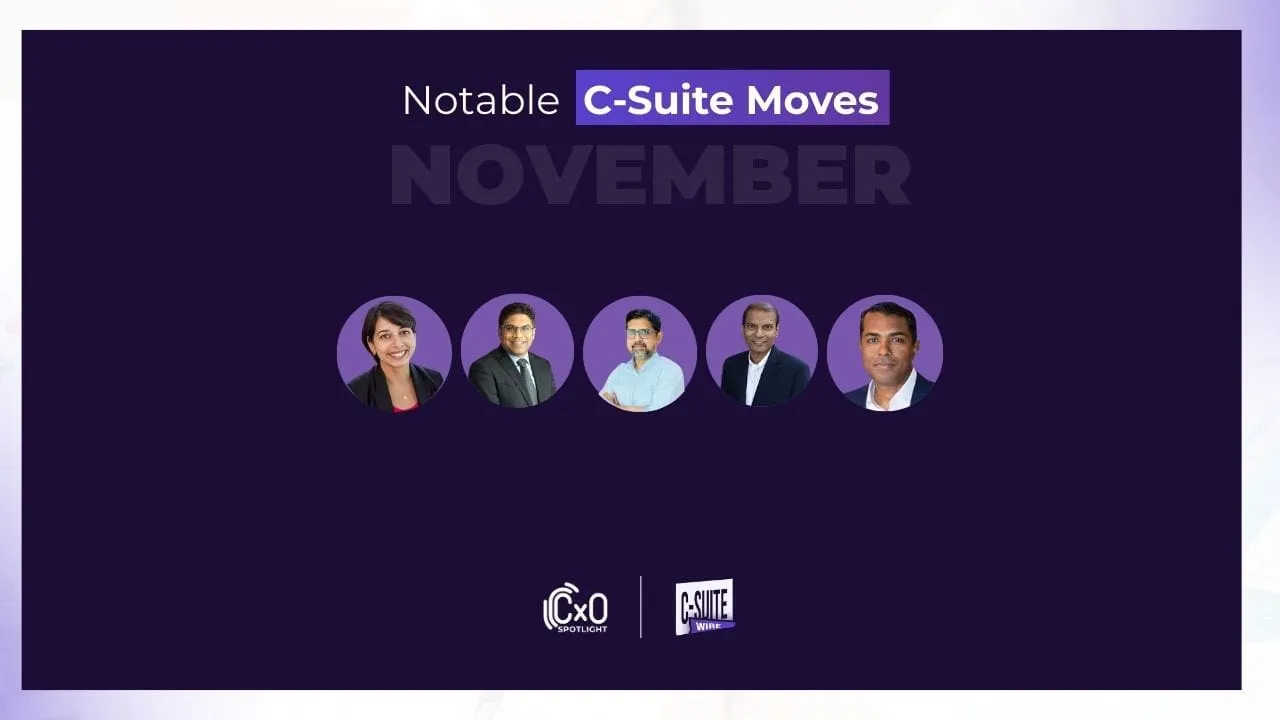
Notable C-Suite Moves (Nov - Dec)
- Vijay Kasarabada → Chief Information Officer (CIO), Ares Management Appointed to lead enterprise technology and digital strategy at the global alternative investment firm, bringing deep experience in financial services technology and large-scale transformation.
- Jonaki Egenolf → Chief Marketing Officer (CMO), XBOW Named to drive brand, growth, and go-to-market strategy as the company scales its presence, with a strong background in building high-impact marketing organizations.
- Kinshuk Gupta → Chief Communications Officer, Tata Consultancy Services (TCS) Appointed to a senior leadership role to strengthen strategic execution and innovation at one of the world’s largest IT services organizations.
- Bratin Saha → Chief Executive Officer, NTT DATA AIVista, Inc. Former AWS and NVIDIA executive appointed to lead the company’s AI strategy and commercialization, as enterprises accelerate adoption of AI-native operating models.
- Kiran Vuppu → U.S. Chief Information Officer (CIO), TD Bank. Takes on the role of leading U.S. technology and digital platforms, focused on modernization, resilience, and customer-centric innovation across the bank’s U.S. operations.
2025 in Review: The Year of AI Inflation Across industries, leaders approved bigger AI budgets than ever before, yet outcomes didn’t scale:
- 88% of AI projects never reached production.
- Nearly a third of CIOs don’t know which AI POCs achieved their metrics.
- 95% of generative AI deployments had no measurable impact on profit & loss
2025 became the year companies built AI, but didn’t monetize it.
Why Value Didn’t Scale (Hard Truths for C-Suites)
1. AI was treated as a cost center - not a product capability.
Most spending went to infra, models, and experimentation - not revenue paths or customer value creation.
2. AI became “everyone’s job,” so it became nobody’s job.
Organizations lacked accountable owners for value realization, leading to diffusion and slow adoption.
3. Complexity killed momentum.
Leaders accumulated vendors, tools, pilots, and parallel programs. Few had standardized pipelines or lifecycle governance.
4. ROI frameworks were weak or nonexistent.
Budgets increased, but business cases didn’t strengthen. Most teams couldn’t tell the board: → “What’s the dollar value of this model?”
2026 Will Be the Year of AI Profitability
The mandate for leaders in 2026 is clear: Convert AI investment into margin, productivity, and revenue - FAST.
Below is a concise executive playbook you can use with your board and leadership teams.
1. Lock AI to P&L Drivers (Not Use Cases)
The new rule: AI is valuable only when it moves revenue, cost, or risk.
Tie every AI initiative to one of these:
- Revenue expansion
- Operating cost reduction
- Cycle-time compression
- Risk exposure reduction
- Customer lifetime value lift
Everything else is deferred.
2. Install “Value Owners,” Not “Model Owners”
In 2026, enterprises will shift to a simple structure:
- Model teams → build models
- Value owners → deliver outcomes
This one shift doubled value creation in top-performing companies in 2025.
3. Optimize AI Infra (Your Biggest Hidden Cost)
Most C-suites underestimate how much margin gets lost here. Action steps:
- Consolidate vendors
- Downscale unused GPU clusters
- Adopt model routing + model distillation
- Use cost-per-inference KPIs
- Push teams toward small, efficient models over frontier models
Expect a 20-40% reduction in AI infra costs in the first two quarters.
4. Monetize AI Like a Product, Not a Feature
Winning companies create:
- AI premium tiers
- Personalized pricing models
- Workflow automation add-ons
- Intelligent co-pilot revenue streams
- Industry-specific value packages
AI monetization will be the biggest competitive differentiator of 2026.
5. Standardize Model Lifecycle: Build → Deploy → Adopt → Audit
In 2026, C-suites must turn AI from experimentation into process.
Critical KPIs:
- Model deployment cycle time
- Time-to-value
- Adoption-to-usage ratio
- Trust & safety compliance score
- Cost-per-inference
- ROI gates met
The 90-Day Action Plan for C-Suites (Start of 2026)
Month 1: Portfolio Rewrite
- Sunset 30-40% of low-value AI projects
- Re-align investments to P&L drivers
- Define enterprise-wide value gates
Month 2: AI Operating Model Reset
- Assign value owners
- Establish model lifecycle governance
- Create a unified data + AI architecture map
Month 3: Revenue + Cost Optimization
- Launch 1-2 monetizable AI features
- Reduce infra via consolidation and small-model strategy
- Operationalize adoption KPIs across business units
This is the clarity boards are demanding for 2026.
C-Suite Trends Going Into 2026
1. AI Profitability Becomes a Board KPI
Boards will ask: → “Show me bottom-line impact - not prototypes.”
2. Workforce Augmentation > Workforce Reduction
The shift is toward AI co-pilots, not layoffs.
3. Vendor Consolidation Accelerates
Too many tools → not enough value. CIOs report consolidation as their #1 lever for AI savings.
4. Regulatory Governance Becomes Mandatory
Especially in finance, healthcare, energy, and tech.
5. Trust Becomes the New Competitive Moat
Privacy UX, model transparency, and explainability become product-level differentiators.
From the Podcast
Why Most AI Investments Die Before Production - And What the Few Winners Do Differently
In this CXO Spotlight episode, Chirag Khanijau speaks with Dr. Mark Brady, Deputy Chief Data Officer at KBR’s Test Resource Management Center, who has built foundational data programs for four major U.S. government organizations, including the U.S. Space Force, and holds nine patents in neural networks and computer vision.
Key Insights:
- Most AI failures are caused by weak data foundations, not bad models.
- AI should be applied selectively - not every problem deserves machine learning.
- Organizational design and data ownership matter more than tools.
- “Data alchemy” persists where discipline and metadata governance are missing.
- The next leap in AI will come from robotics and real-world machine experience.
Why it matters: AI success is now a leadership challenge, not a technology one. Dr. Brady’s perspective reframes AI from experimentation to infrastructure - showing CXOs how disciplined data strategy separates scalable impact from stalled pilots.
📢 Get Featured
If you’re a company official, board member, or insider in North America - share your verified C-Suite appointments. We’ll feature them in CXO Spotlight for visibility among senior executives, investors, and industry watchers.
Send us your recommendations via DM or email at hello@flywheelr.com
Enjoyed this issue? Forward it to a colleague, subscribe if you haven’t already, and follow us on LinkedIn for daily CXO updates.