

Read in 90 seconds:
- Notable C-Suite Moves
- What’s New In Tech
- C-Suite Trends For Leaders
- From the Podcast
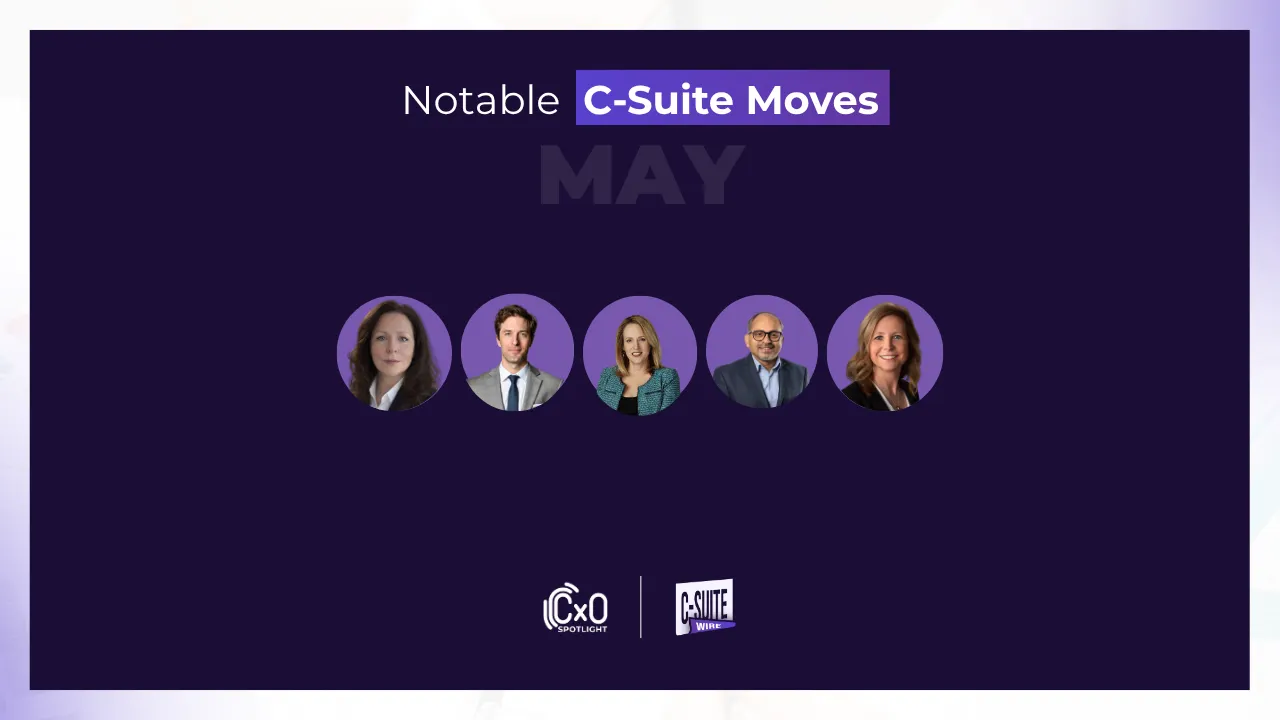
Notable C-Suite Moves (May)
- Nicole Reineke- Chief AI Officer, N-able. Leads the company’s applied AI strategy across products and partner ecosystems, with a focus on practical AI innovation that improves efficiency and security. Previously led key AI initiatives at N-able and founded the Consortium for AI Terminology for MSPs & IT Pros.
- Sam Cari- Chief Strategy Officer, OnePoint BFG Wealth Partners. Leads corporate strategy, advisory delivery, and M&A initiatives to support the firm’s growth agenda. Previously served as Chief Legal Officer & Partner at NorthRock Partners.
- Kristine Martin Anderson- President, Booz Allen Hamilton. Expands her leadership responsibilities alongside her role as Chief Operating Officer, helping drive the firm’s growth strategy and technology transformation. Brings more than 20 years of leadership experience at Booz Allen.
- Raj Singh- Executive Vice President & Chief Information Officer, Diebold Nixdorf. Oversees global IT, cybersecurity, enterprise AI, and infrastructure modernization initiatives. Previously served as Global CIO at Visteon Corporation and held technology leadership roles at FordDirect, Ally Financial, and Ford Motor Company.
- Cheryl Lim- Chief Human Resources Officer, Jacobs. Leads the company’s global people strategy, talent development, and organizational effectiveness initiatives. Previously served as CHRO at Vertiv and held senior HR leadership roles at ITT Inc. and Honeywell.
What’s New in Tech
Enterprises are Moving From Stability to Continuous Recalibration
The biggest shift happening inside enterprise technology teams is not AI adoption but the disappearance of stable operating conditions.
Technology leaders are now managing in an environment where priorities change mid-quarter, budgets are constantly reevaluated, vendor strategies are reassessed, and AI capabilities keep evolving faster than most governance models can keep up with.
According to Gartner’s 2026 CIO Agenda, 94% of CIOs expect significant changes to plans and business outcomes within the next 24 months. That changes how organizations operate.
The companies moving fastest are the ones that can adapt operationally without slowing the business down.
This is why CIOs are shifting focus toward:
- Dynamic resource allocation
- Trigger-based decision making
- AI-supported operations
- Vendor flexibility
- Resilience planning
- Faster execution cycles
The conversation is moving towards: “How quickly can the organization adapt when conditions change?”
C-Suite Trends for Leaders
CIOs -> Enterprise Operators + Technology Leaders
The CIO role is becoming one of the most operationally influential positions inside the enterprise. This is because technology now shapes how quickly companies can respond to disruption, cost pressure, workforce shifts, and market uncertainty.
Gartner’s A.R.T. framework highlights the three capabilities of high-performing CIOs: Agility, Risk-readiness, and Tenacity.
But there is one larger capability: Operational adaptability.
The strongest CIOs in 2026 will:
- Reprioritize investments faster
- Align technology decisions closer to business outcomes
- Build operational resilience into vendor and AI strategies
- Reduce friction across internal teams
- Translate technology execution into financial impact
This is also changing how boards evaluate technology leadership. Execution discipline, adaptability, and resilience are becoming just as important as innovation.
The CIOs gaining influence are the leaders who help enterprises become operationally stable while continuously changing.
From The Podcast
Why Continuous Defense Is the New Cybersecurity Playbook
In this CXO Spotlight episode, Nidhi Aggarwal, Chief Product Officer at HackerOne, explains why the zero-day window has collapsed from 23.2 days to 20 hours, how AI is reshaping vulnerability discovery, and why CISOs need to move from periodic security reviews to continuous detection, validation, and remediation.
Why this matters: Security teams were built on the assumption that they had time to respond. That assumption no longer holds. Nidhi’s perspective shows why the next cybersecurity operating model must combine AI speed, ethical researcher judgment, and continuous vulnerability operations to help enterprises defend at the pace of modern attacks.
📢 Get Featured
Are you an executive, board member, or company insider in North America? Share verified C-suite appointments for CXO Spotlight feature here: https://www.thecxospotlight.com/get-feaured/
Enjoyed this issue? Forward to a colleague, subscribe, and follow us on LinkedIn for daily CXO updates.